偷心俏冤家
How a 'Three-Body' fan became China’s award-winning sci-fi writer_我的网站

一 | 这也导致Pro版渠道价一度加价千元,不过最近几天需求已经明显放缓,发货时间开始缩短,最晚开卖的iPhone 14 Plus渠道价更是“一泻千里”。

二 | 根据第三方店铺最新报价,iPhone 14 Plus目前价格已经趋于稳定,最高相比官网价破发1700元。

三 | 具体如下:128GB 黑/蓝6199元 白紫6249 红色5999元,官网6999元,破发1000元;256GB 黑/蓝7099元 白紫7149 红色6999元,官网7899元,破发900元;512GB 黑/白/蓝8199元 紫8249 红色7999元,官网9699元,破发1700元。

四 | iPhone 14 Plus价格下跌速度也是破了苹果新机的记录,10天时间暴跌1700元,喜提“年度跳水王”称号。另外值得注意的是,这次不论多大容量的版本,红色的价格都要明显更低,这其中很大原因就是因为今年红色的色调与以往差别很大,相对更加扎眼,很多用户都不再愿意选择。

Before becoming an award-winning science fiction writer, Baoshu was simply a fan fascinated by Hugo Award winner Liu Cixin's The Three-Body Problem. His desire to explore the universe created by the blockbuster trilogy led him to write The Redemption of Time (Remembrance of Earth's Past), a fan work that later became a published novel.
Years later, Baoshu has become one of the notable voices in Chinese science fiction. He was honored with the Mao Dun Newcomer Award this year, one of China's most prestigious literary awards for young writers. Established in 2015, the award recognizes outstanding writers and critics under the age of 45.
The award committee said his works have expanded the possibilities of science fiction through exploration of time, civilizations and the impact of technology on everyday life.
The honor adds to a growing list of achievements. Baoshu had previously won the Galaxy Award, China's equivalent of the Nebula Awards. His short story Tasting the Future Delicacy Three Times was a finalist for the Hugo Award for Best Short Story in 2024.
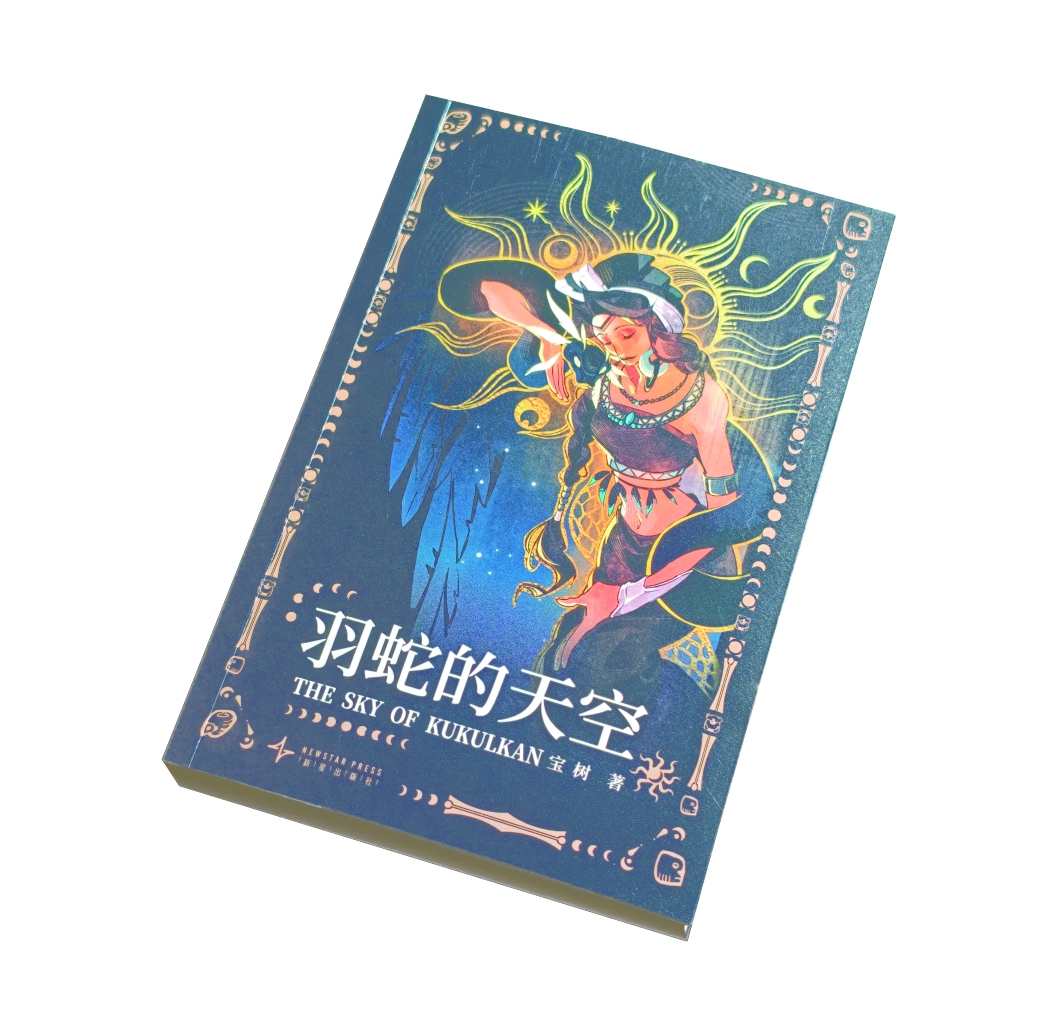
In his latest novel, The Sky of Kukulkan, published by New Star Press, Baoshu turns his fascination with the ancient Maya civilization into a story about humanity itself. The book is Baoshu's first major work after receiving the Mao Dun Newcomer Award.
Set during the final period of the Maya Classic era, the novel follows a fallen prince who, with the help of a priestess, gradually uncovers the secrets behind astronomical movements, unusual solar phenomena and the legend of the Feathered Serpent deity.
For Baoshu, the story is ultimately not only about the Maya, but also a reflection of humanity itself, its pursuit of knowledge and the universe, as well as the conflicts driven by human flaws.
"I think the most fascinating part of this story is that the Maya civilization is a microcosm of humanity itself," Baoshu told the Global Times. "It reflects mankind's journey to explore the universe and seek truth, while also showing how human weaknesses, such as greed and hostility, can lead to endless conflicts within society."
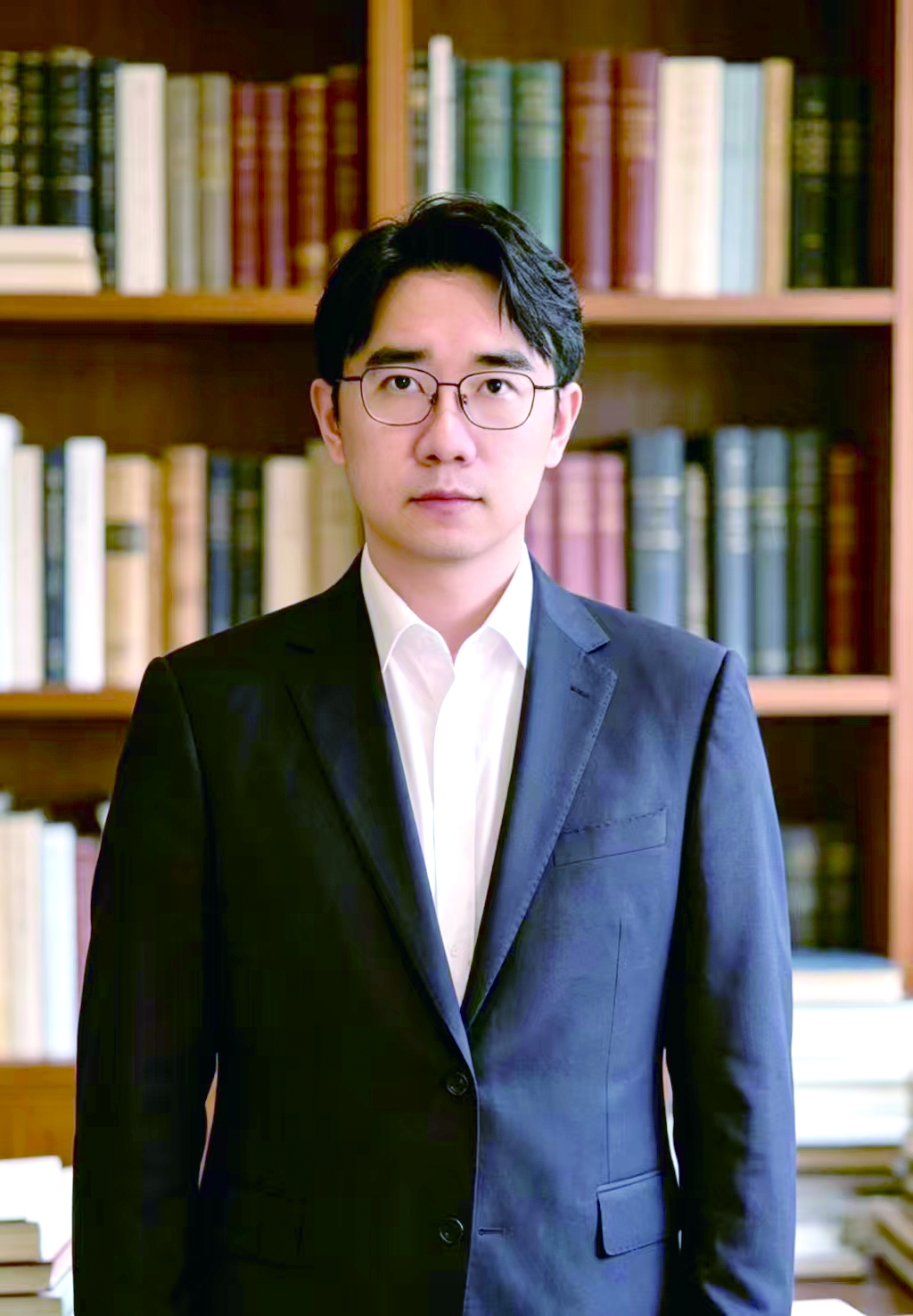
The road to sci-fi
Born in 1980, Baoshu developed his passion for writing early. After moving to Haiyan, East China's Zhejiang Province, at the age of 6 with his parents, who worked in nuclear power construction, he spent much of his childhood reading science fiction and popular science books in local libraries.
As a primary school student, he began writing his own science fiction stories, although he said that his early works were immature.
His pen name, "Baoshu," has a much simpler origin. More than two decades ago, he chose it casually as an online username because he was a fan of Chinese martial arts novelist Jin Yong and created several usernames inspired by characters from Jin Yong's works. Most disappeared over time, but "Baoshu" remained.
After studying philosophy at Peking University, he continued writing short stories. His professional science fiction career began in 2010 while studying in Belgium, when his admiration for Liu Cixin's The Three-Body Problem inspired him to write the fan fiction novel The Redemption of Time (Remembrance of Earth's Past).
"His work has always set a benchmark for me, a standard I hope to approach even if it remains a distant goal," he said.
For Baoshu, The Redemption of Time (Remembrance of Earth's Past) was driven mainly by his love for Liu's fictional universe and his desire to explore the possibilities beyond the original trilogy.
"The world created by The Three-Body Problem is so rich and diverse that you feel there are many stories behind it that were not told," he said.
"I wanted to express some of those possibilities in my own way."
Sci-fi future
Baoshu said that, looking ahead, science fiction will continue expanding as technology changes society.
With technology such as artificial intelligence (AI) advancing at an unprecedented pace, the boundary between science fiction and reality is becoming increasingly blurred. Ideas once imagined only in novels are now entering everyday life, creating new questions and possibilities for writers to explore.
AI, for example, has created new creative opportunities and raised new questions about humanity's relationship with machines. But he noted that AI is not an entirely new topic for science fiction.
"Science fiction has been writing about AI for many years," he told the Global Times. "At different stages, new technologies emerge and connect with new social issues, creating new possibilities for storytelling."
He expects one major direction for future science fiction will be "science fiction realism" - stories that focus on how technology affects ordinary life, society and human emotions.
Another challenge for Chinese science fiction is finding deeper connections with local culture.
"Science fiction was once seen as a relatively foreign literary form because it originated overseas," Baoshu said. "But as the genre expands into deeper areas of social life, it also changes how we understand the past."
He said, as science fiction continues to gain popularity in China, the genre is creating more opportunities for new voices.
Efforts to promote new forms of popular literature have given people from different backgrounds more opportunities to write and share their voices.
。

五 |
Current article:http://pv1ts.ganweilingmukuai.shop/news/20260826_5298147.html
Published on:00:00:00


